
Pedagogical Design
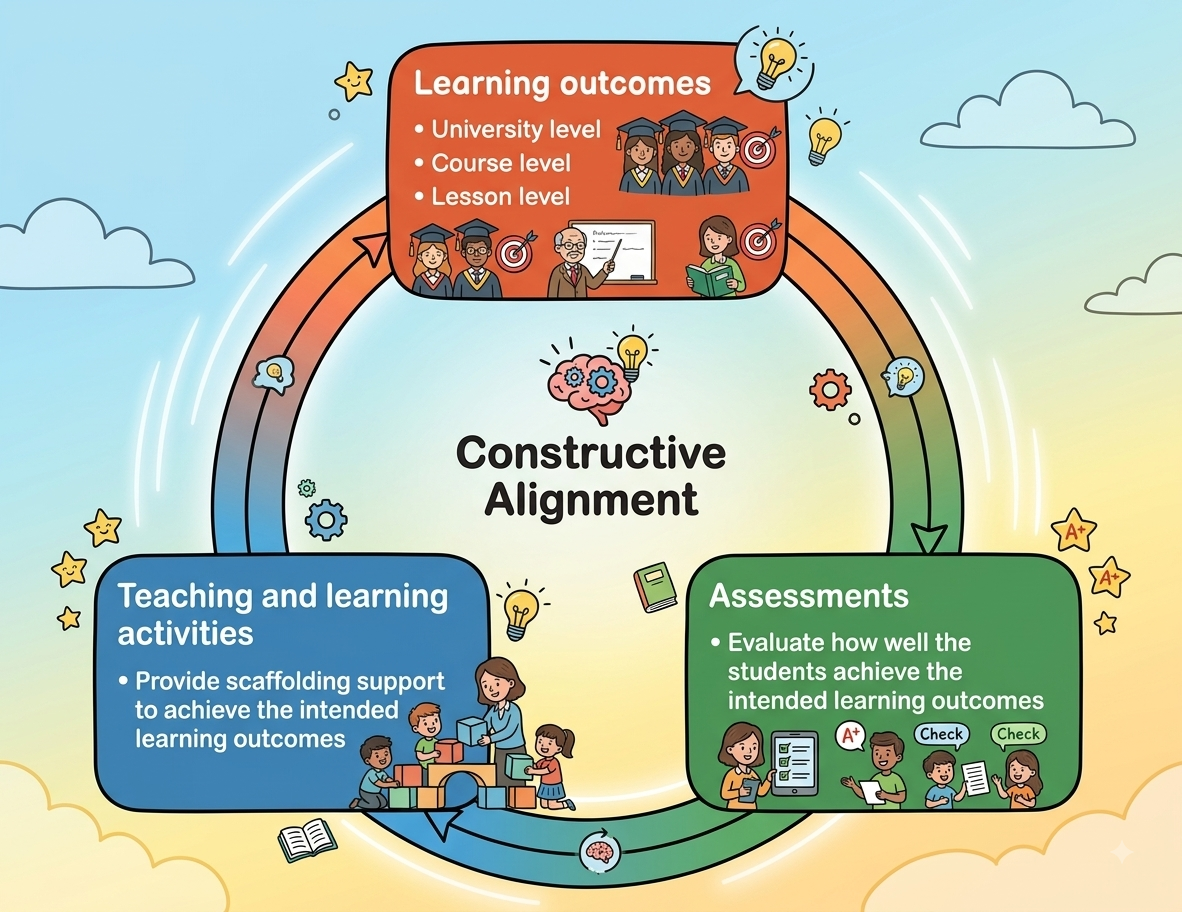
In my pedagogical design, I integrate constructive alignment and outcomes-based principles to ensure that learning objectives, teaching activities, and assessments are consistently aligned, which enhances student engagement and learning outcomes. Here is how I apply these principles:
Define Clear Learning Outcomes
I begin by establishing clear Lesson Intended Learning Outcomes (LILOs) for each lesson, which align with the Course Intended Learning Outcomes (CILOs). These outcomes specify what students should know and be able to do upon completion of the lesson and the whole course.
Design Student-Centred Learning Activities
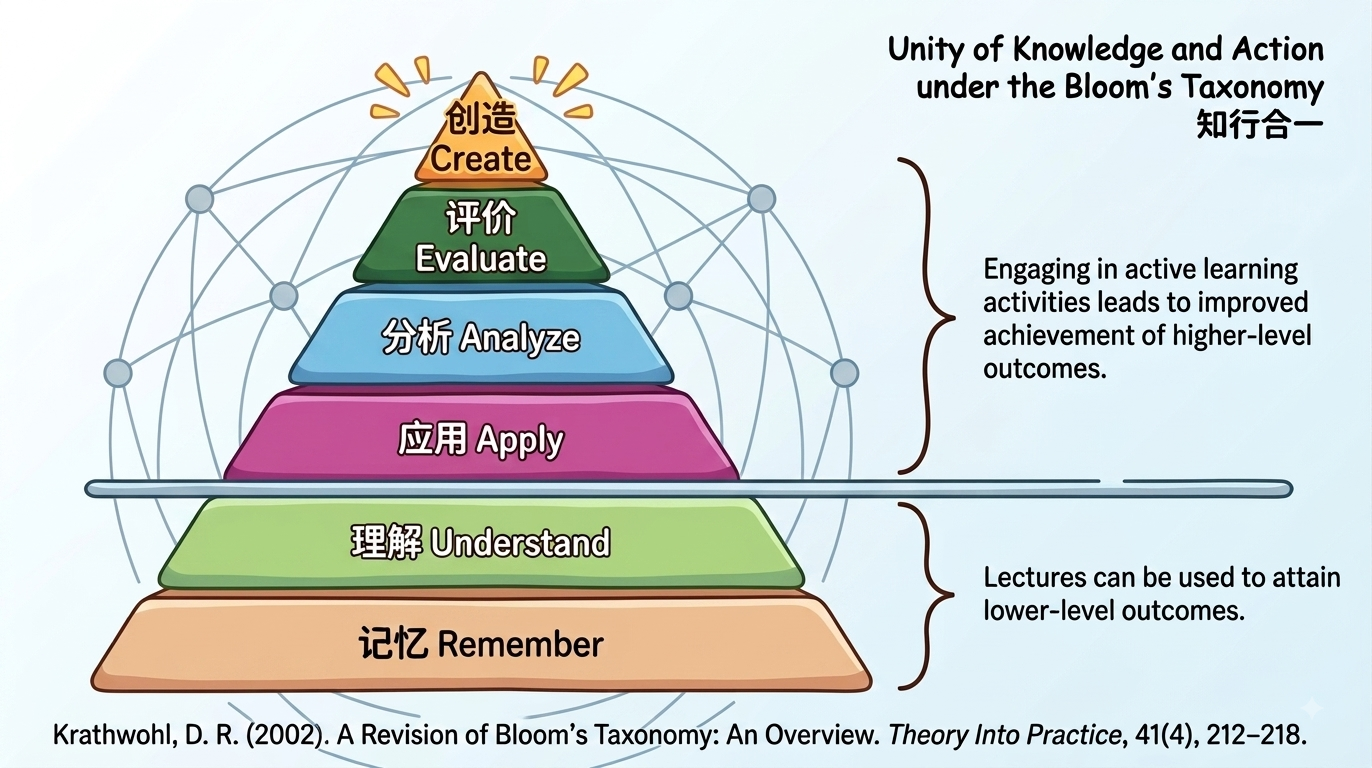
Based on the LILOs, I use (minimal) mini-lectures to provide scaffolding support to lower-level learning outcomes in Bloom’s Taxonomy (remember and understand), while active and collaborative learning activities such as real-world scenarios, case studies, and problem-solving tasks are more suitable for higher-level learning outcomes (apply, analyse, evaluate, and create).
Align Assessments with Learning Outcomes
All assessments are carefully aligned with the LILOs and CILOs to ensure they accurately measure the intended learning outcomes. I use diverse assessment methods such as project reports, group discussions, and simulations to evaluate students’ ability to apply knowledge in real-world situations. This approach not only assesses knowledge (i.e., assessment of learning) but also emphasises skill development and innovation through the process (i.e., assessment for learning).
Reflect and Improve
After each lesson, I reflect on the effectiveness of my teaching strategies, noting what worked well and where improvements can be made. This reflection helps me refine my instructional design to better support student learning and ensure that teaching activities and assessments remain aligned with the desired outcomes.